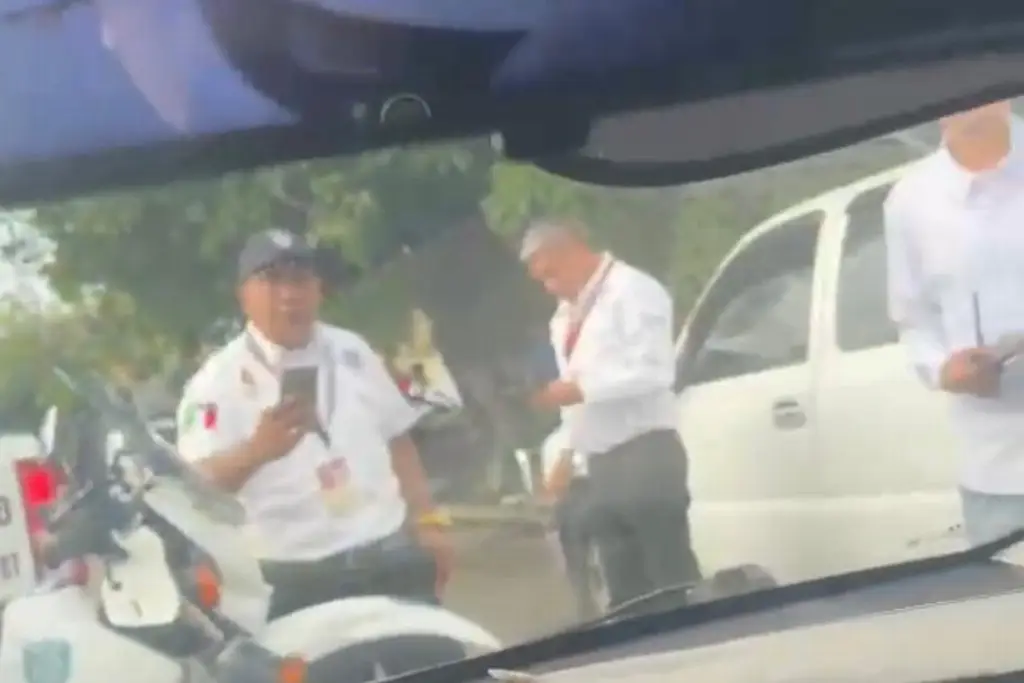

On Monday afternoon, Public Transportation officers from the state government carried out an operation against private vehicles operating in the Veracruz-Boca del Río metropolitan area.
The operation resulted in the seizure of at least one vehicle on a public roadway that was being used for Uber and had out-of-state license plates. The action caught drivers in the area by surprise, amid demands for regulation of the sector.
The operations were concentrated on Miguel Alemán Avenue, specifically the stretch between J.B. Lobos and Alcocer streets, one of the city’s busiest thoroughfares.
According to the Veracruz Union of App-Based Drivers (Uveca), the operation was carried out suddenly and without prior notice, following the same pattern as previous interventions.
It also took place one day after some drivers demonstrated along Ávila Camacho Boulevard, demanding a legal framework that would allow them to work.
This is not the first time: the June incident that ended in a road blockade
It is worth noting that at the end of June, the state agency had already intensified operations against vehicles from platforms such as Uber operating in Veracruz.
On that occasion, at least three vehicles were seized, prompting an immediate reaction from the affected driving community.
On June 29, a group of organized drivers blocked the northern part of the city of Veracruz, bringing traffic to a standstill for hours and highlighting the accumulated tension between those working with mobility applications and state authorities, which demand that they be regulated before operating.
That conflict brought to the forefront a discussion that had been pending for some time: How should Veracruz regulate transportation through digital platforms? What legal framework do drivers and users need for this service to operate with legal certainty?
Rocío Nahle’s promise: a legislative initiative that has yet to arrive
In response to the pressure generated by the blockade and the growing mobilization of drivers, Governor Rocío Nahle García addressed the issue.
In response to the escalating tension, she announced that her administration would submit a legislative initiative to the Veracruz State Congress specifically aimed at regulating transportation services provided through digital platforms in the state.
Weeks after that public commitment, the initiative still has no specific presentation date. Discussions between authorities and drivers are only beginning to take place.
Amid this uncertainty, the operations continue. And every time a vehicle is seized, the tension resurfaces.
A service without a clear legal framework in Veracruz
In much of Mexico, platforms such as Uber, Didi, and inDriver have been operating for years, while state regulatory frameworks have failed to keep pace with the speed at which these services have become part of the daily lives of thousands of users.
In Veracruz, the absence of specific legislation has left drivers in a constant state of vulnerability: they operate legally from the perspective of the platforms that contract them, but face state operations questioning their right to circulate.
Caught between these two positions are the people who use these applications daily to get around the city. They have the least voice in the debate, even though they may be among those most interested in seeing the issue resolved.
What comes next after Monday’s operation?
While the legislative initiative promised by the state government remains pending, the operations will continue to be the only instrument available to the government to intervene in a sector that, by this point, has already become an essential part of mobility in Veracruz.
Drivers working for digital platforms in the Veracruz-Boca del Río metropolitan area remain waiting for a concrete signal: a date, a draft proposal, or a dialogue table. For now, they continue working with the uncertainty that another operation could appear at any moment.
Source: weu