
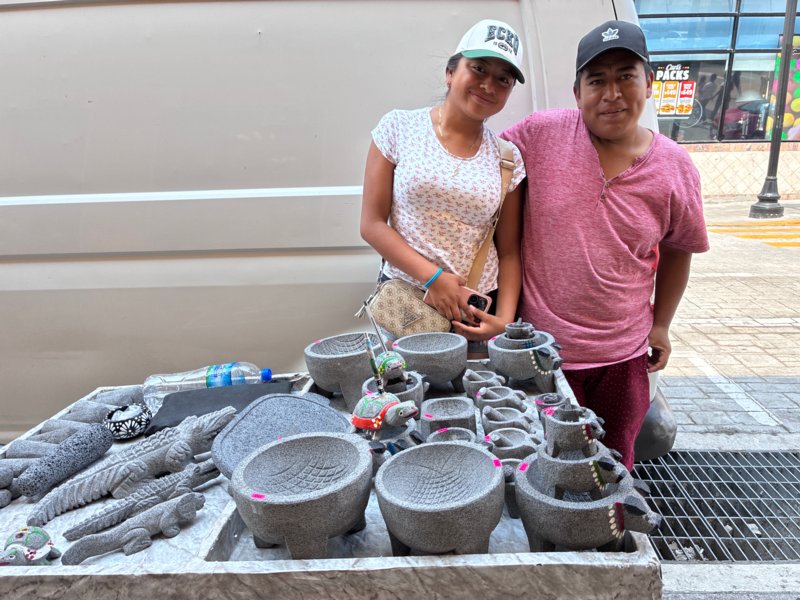
Ana Cristina Macedonia and Armando Ortiz, a young couple, describe the challenges they face in crafting and selling their artisanal goods.
Production Process
In an interview, they explain that they go to the quarry, extract the pieces of stone, transport them to their workshops, and shape them using machinery.
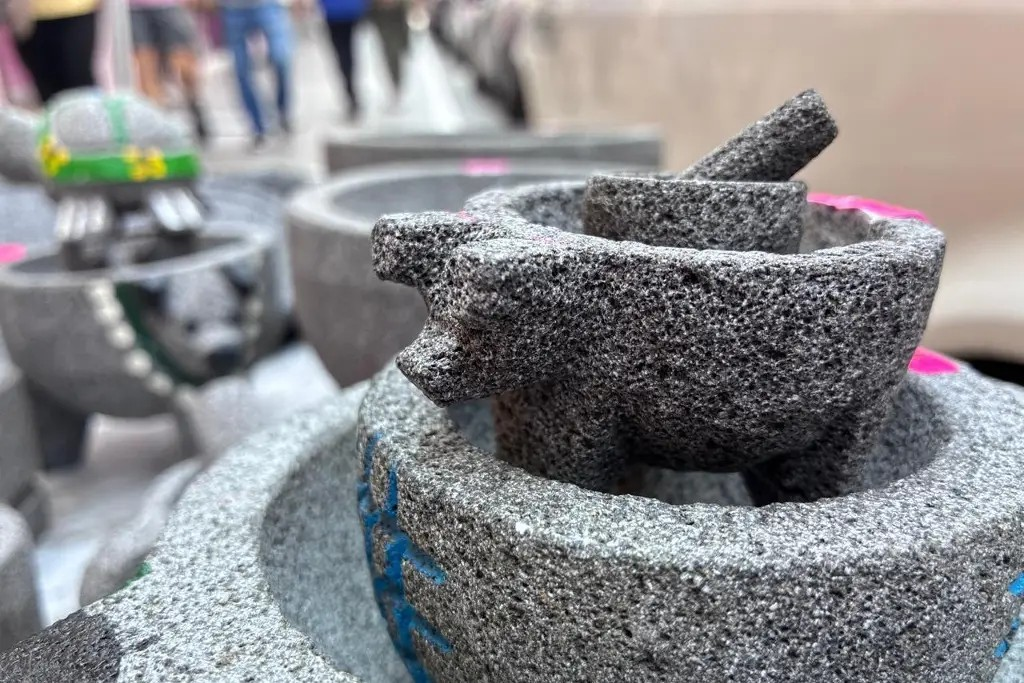
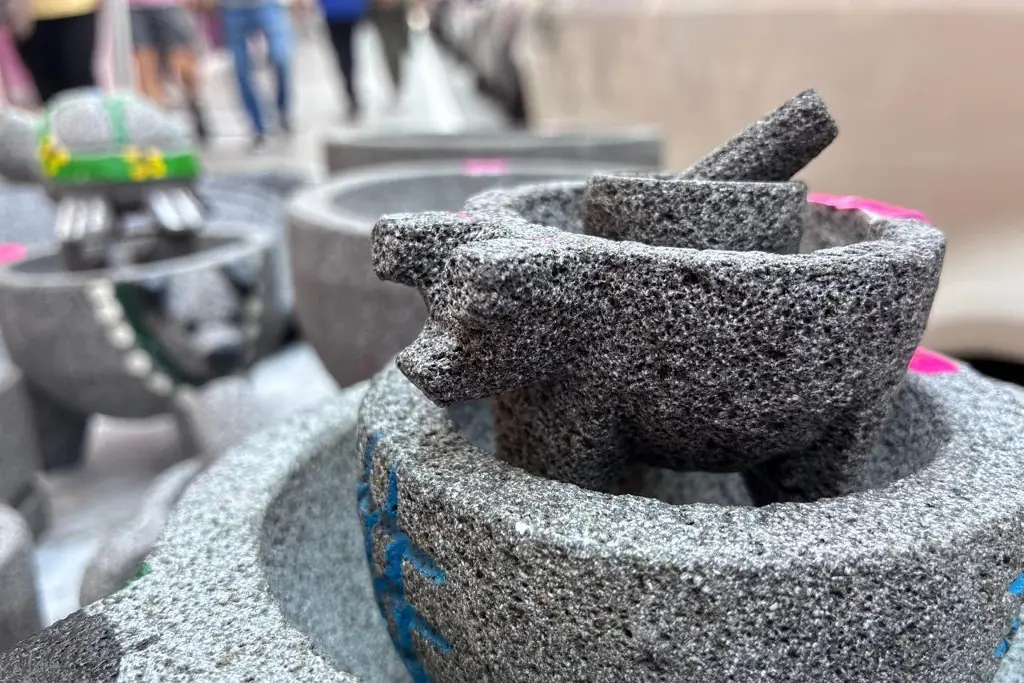
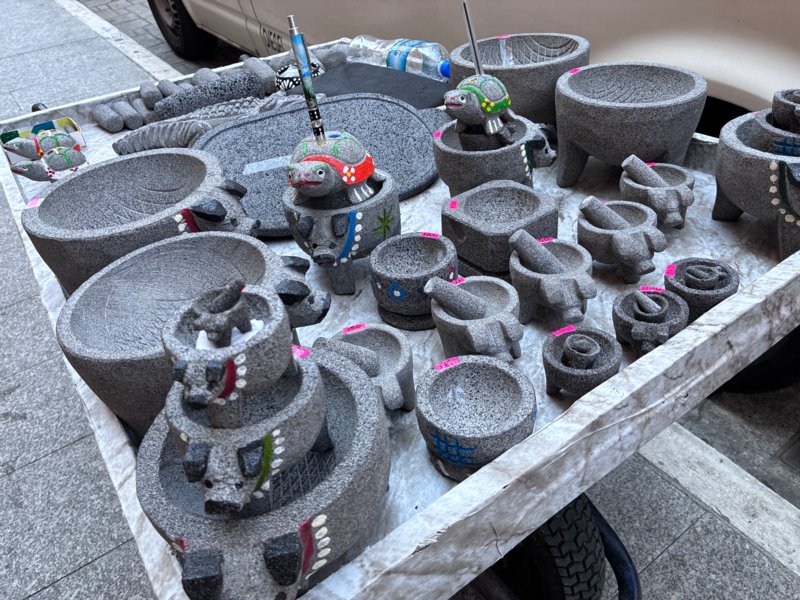
Although it depends on the size, each molcajete (mortar and pestle) takes approximately three hours to make, thanks to the experience of those who dedicate themselves to this craft.
Each family has the necessary clothing and tools to work the heavy material and transform it into molcajetes, tecuichas (cylindrical or conical stones used for grinding and crushing food), and decorative figures for their homes.
Prices
Prices also vary, ranging from approximately 130 to 390 pesos, because there are still those who prefer to make salsas by hand, although this is becoming less common.
Adding to the low sales is the fact that some people haggle, trying to pay them less for the crafts they make with great effort.
Health Risks
“Some people are dying, getting lung problems because the dust (from the stone) gets into their lungs, and they don’t appreciate it, but this work is expensive,” Armando says.
The workers also suffer injuries when they cut themselves on the discs used to shape the pieces, but they consider it part of the routine.
They offer their products on the streets of downtown Veracruz, which pique the curiosity of some people, trying to survive the adversities and the difficult economic situation that prevails.
It should be noted that they don’t have a fixed place to sell; however, they can usually be found between Independencia, 5 de Mayo, and Zaragoza avenues.
Source: xeu