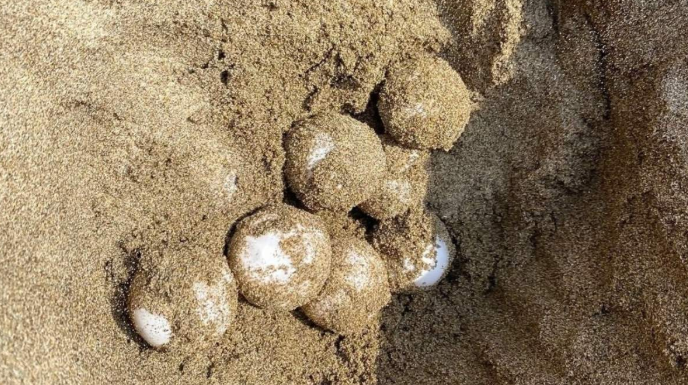

On the coast of southern Veracruz state, the presence of tar continues to be recorded, endangering the turtles that come to nest this season, stated Alfonso Monroy Zamites, General Director of the Caretta Mx Foundation.
He noted that although the arrival of tar on Veracruz beaches began in early March, almost three months later the hydrocarbon is still visible on beaches in the municipality of Coatzacoalcos.
He commented that the foundation conducts daily patrols of the area and finds everything from small patches of hydrocarbon to medium-sized clumps, so they have called on the authorities to continue the cleanup efforts in the area.
He said it is worrying that tar continues to wash ashore, as the turtles that come to lay their eggs on the beach become covered in tar, which can endanger their health and that of their hatchlings.
He added that they have also observed how some of these reptiles choose to seek other nesting sites upon detecting the presence of fuel in the water and sand.
“Crude oil is washing ashore on our coast, along the entire coastline from the Coatzacoalcos River to Barrillas, in both small and large quantities. Specifically in the Barrillas area, large amounts of hydrocarbons are clearly visible spilled into the sea,” he stated.
“As they drag their bellies along the sand, they encounter patches of tar that are currently all along the Coatzacoalcos shoreline. Some turtles return to detect the smell, go back to find other areas, and those that do manage to come ashore to lay their eggs are covered in tar,” he added.
He said that during the current nesting season in southern Veracruz, the organization he represents has recorded 16 egg-laying events, eight of which occurred in Coatzacoalcos and another eight in Agua Dulce.
He recalled that sea turtles are an endangered species and therefore insisted that they must be protected and that the authorities must complete the cleanup of their environment.
It should be noted that since March 2nd, the beaches of the municipality of Pajapan have been closed to the public for safety reasons, due to the reported presence of hydrocarbons in both the sea and on the sand.
Subsequently, as the days passed, the oil spill continued to spread northward through the state, affecting dozens of beaches in all the coastal municipalities.
On April 16th, federal authorities admitted that the oil spill in the Gulf of Mexico originated at facilities belonging to Petróleos Mexicanos (Pemex), due to a leak in an oil pipeline near Abkatún Pol-Chuc in Cantarell.
Source: lajornadadeoriente