
To the Constitutional Governor of the State of Veracruz, #RocíoNahleGarcía.
To the Authorities of the H. #VeracruzCityCouncil
To the Media and the General Public
Through this statement, THE #RESISTENCIACIVILDEPOZARICA and the #transportation sector categorically raise their voices to publicly denounce the systematic abuses, #extortion and acts of #corruption committed by members of #MunicipalTraffic and #Transit in the #portofVeracruz, headed by Director #VirgilioTorresIbarra.
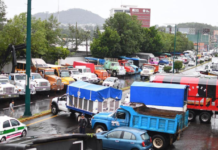
Day after day, transportation workers face improper charges and arbitrary fees ranging from $20,000 to $50,000 pesos for alleged permits, requested under any pretext without any legal basis, simply for traveling along the avenues and roads within the jurisdiction. Otherwise, the vehicles are taken to the #impoundlot.
This unsustainable situation directly affects our assets, the livelihood of our families, and the region’s supply chain.
The #ResistenciaCivilDePozaRica declares itself to be on alert and states that it is tired of the constant harassment and dispossession. Therefore, we formally demand:
- Immediate intervention by State Governor Rocío Nahle García and internal control agencies to stop abuses by municipal traffic officers.
- Immediate cessation of #illegalfees_ProtectionMoney and arbitrary detention of transportation vehicles in the city.
- Investigation and exemplary punishment of the #publicservants and officials involved in these #extortionnetworks.
We respectfully but firmly call for dialogue and the immediate resolution of this problem. If we do not receive a clear response, guarantees of legal certainty, and a complete end to these arbitrary actions, we will be forced to exercise our right to social protest by holding demonstrations and blockades on the main roads of the municipality and the state.
We are not asking for privileges; we are only demanding compliance with the law, respect for our work, and an end to dispossession.
In 1942, a family was ordered out of Cárdenas, San Luis Potosí.
The town’s officials fought it. Municipal authorities wrote to the federal government insisting the Kasugas were honourable, hard-working and law-abiding, and that there was no reason to move them.
The request was denied.
Their offence was their surname. After Pearl Harbor, the United States pressed Mexico to move Japanese residents living near the border into the centre of the country. It did not matter that the children had been born on Mexican soil.
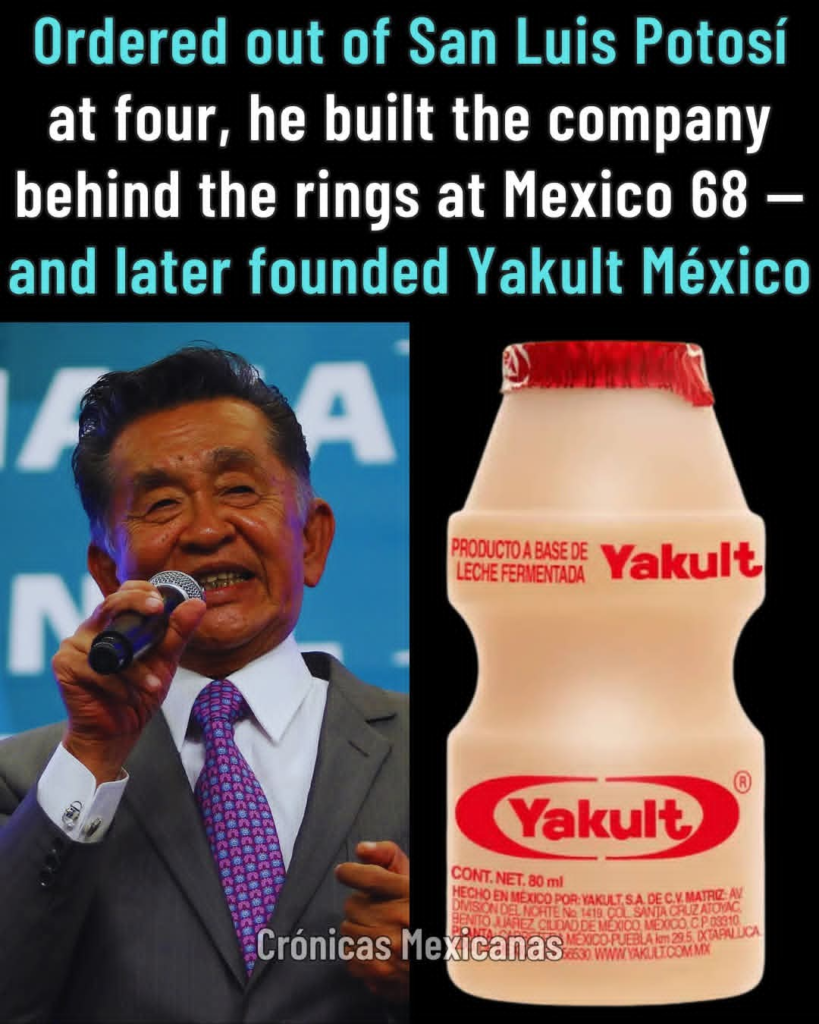
Carlos Kasuga Osaka was four years old. He has said that one of the few times he ever saw his mother cry was at the train station, as the people of Cárdenas walked the family there to say goodbye.
He was born on 26 October 1937 in Cerritos, San Luis Potosí — inside the store where his parents worked. His father, Tsutomu, had come from Nagano in 1930, at twenty, after the 1929 crash cut the value of the region’s silk in half and left its farming families in hardship and unemployment. His mother, Mitsuko Osaka, arrived in 1936, having accepted a proposal that reached her as a letter and a photograph: he was not a wealthy man, he wrote, but he was honest and would work hard to support a family. She came with a few belongings and two things she would not leave behind — a Japanese flag and her book of poetry.
By September 1938 they had opened their own store in Cárdenas, on their savings and on merchandise advanced by suppliers who trusted them. They named it after their son. Carlos Kasuga.
Four years later they were put on a train and told to leave it.
In Mexico City the relocated families settled near one another in Tacubaya.
They had very little — and they spent it on a school. The Tacubaya Gakuen opened so their children could keep learning. Carlos attended it in addition to public school, studying twice over. His father sold fruit and vegetables in the street near the central market. After the war, the Kasuga and Yamazaki families opened a candy shop together that stayed open every day of the year except New Year’s Day.
He earned an accounting degree at the Escuela Bancaria y Comercial. In 1956 he went to Tokyo to study at Sophia University — one of the first from Mexico’s Japanese community to go, and he went without a scholarship. There he noticed something ordinary that nobody back home was doing yet: Japan’s toy industry was working with new kinds of plastic.
He and his family built a small business on it. Industrias Kay grew into one of Mexico’s leading makers of inflatable toys.
Then, in 1968, Mexico hosted the Olympic Games.
And the giant Olympic rings that rose into the sky over the opening ceremony in Mexico City had been made by Kay.
Twenty-six years after that family was put on a train out of San Luis Potosí, the company their son had built made the rings that opened Mexico’s Olympics.
He was not finished. In 1981 he founded Yakult’s Mexican division — securing the permits, establishing the plant at Ixtapaluca in the State of Mexico, with home delivery beginning in 1982. He was already a successful industrialist by then. He did not inherit the company and he was not handed a title. He founded the Mexican operation and then ran it, serving as its director and later as president of its board.
That same year he became the first president of the Pan American Nikkei Association, a post he held until 1995.
He helped found the Liceo Mexicano Japonés. He has given to the secondary school in Acacoyagua, Chiapas — where the first Japanese immigrants arrived in Mexico in 1897 — and to the Escuela José Gálvez in El Callao, Peru. At 80 he was still out on the street himself, leading public clean-up campaigns that drew hundreds of volunteers.
He spent decades filling auditoriums across Mexico, teaching four steps in a fixed order and refusing to let anyone skip to the last. Be a person of good character: punctual, honest, disciplined. Do your work well. Find the satisfaction that comes from giving more than you receive. Only after those three, he says, comes having — and he warns people not to chase the having quickly and easily before they have done the rest.
On punctuality he does arithmetic instead of moralising. About six hundred people in this room, he told one audience, and a speaker who arrives ten minutes late has just cost this nation six thousand minutes.
They tried to make him a foreigner in his own country.
He spent his life building it. 🇲🇽

Source: mexicodailypost